



















Prosthetic Leg: To Cover or Not to Cover?

When I first started my career as a Prosthetist in the late 90s, most—if not all—of my patients preferred to cover their prosthetic legs. Leaving prosthetic legs bare wasn’t the standard, to say the least. Covering prosthetic limbs and hiding the fact that one is a prosthetic wearer was the trend.
 Image by Alleles Design Studio
If someone chose to wear their prosthesis without a cover at that time, it was usually done out of convenience rather than a way to express their mettle. As a Prosthetist, I typically lean towards uncovered prosthetic legs because adjusting and realigning a prosthesis is even more difficult with a cover in the way. In fact, during the last decade, many a prosthetic cover was left damaged due to repeated removal to access the prosthetic components. Because of this, prosthetic covers are usually the last thing applied after receiving a new prosthetic leg.
A badge of pride
Today, more and more people are choosing to bare their prosthetic legs and let the world know that they have surpassed great challenges. Prosthetic limbs are not seen as a source of shame but of pride.
Cindy Charlton, a triple amputee, said it best in an article she wrote for Amputee Coalition:
“I want people to know that I wear prostheses. And, as much as I hate to admit it, it comes from a sense of pride, almost like being proud of some sort of accomplishment. As any lower-extremity amputee knows, there is a great deal of accomplishment and pride when you learn how to walk with a prosthetic leg. But even more than that, I want people to know that I have survived, and I want them to think, ‘Wow! If she can survive and accomplish that, then maybe I can survive and overcome the obstacles in my life.’ I want people to know that the human spirit is formidable, that any adversity and challenge is not too great to conquer.”
Because of this perspective shift, numerous amputees have graced news headlines. We have Brenna Huckaby, the first amputee to pose on the cover of Sports Illustrated; Shaholly Ayers, the first amputee model to walk the runway in New York Fashion Week; and Sen. Tammy Duckworth who made history as the first double amputee senator to cast a vote on the Senate floor with her newborn baby.
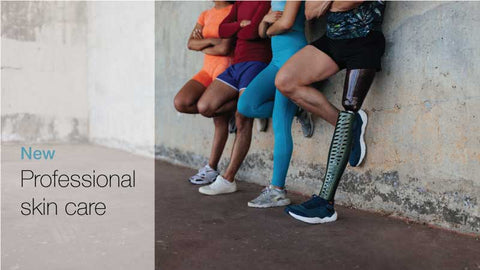
Along with this shift in perspective come leg designs that express the wearer’s personality, from a full carbon-graphite look to 3D-printed covers.
Choosing a lifelike prosthetic cover doesn't mean someone is any less confident or proud of their journey. Some people prefer to show their prosthetic components, while others feel more comfortable with a natural-looking leg. Both choices are equally valid.
Endless options
Back in the 90s, prosthetic wearers had only two options for a prosthetic cover: a foam cover with cosmetic hosiery or a “life-like” silicone skin. Today, prosthetic wearers have more options for personalizing their legs. Traditional foam covers and lifelike silicone skins are still available, and companies such as ALLELES Design Studio and UNYQ offer decorative, custom-designed options covers in a range of colors, patterns, and finishes. Some modern covers are also designed to protect prosthetic components during everyday activities.
3D-printed covers in various designs and color choices are available through your prosthetist. You can also get your prosthetic socket airbrushed by Prosthetic Ink. Dan Horkey, the founder of Prosthetic Ink, does fantastic work.
Ultimately, whether to cover your prosthetic leg is a personal choice shaped by your preferences, lifestyle, and practical needs. You might choose a lifelike finish, a bold custom design, or exposed prosthetic components—the right option is one that fits your lifestyle without affecting your prosthesis's function. Before adding a cover, consult your prosthetist to ensure it's compatible with your prosthetic components.
We’d love to know your preference. Share it with us in the comments section below.
Related Reading
Confidence by Design: The Assistive Technology Powering Adaptive Athletes


